
How to practise
- Look at the centre of each word, where one letter is highlighted. Do not move your eyes along the line.
- Do not say the words in your head and do not go back. Missed a word? Keep reading.
- One lesson a day. If you lose the meaning, repeat the lesson tomorrow before moving on.
The videos use the Sherlock Holmes stories by Arthur Conan Doyle.
What to expect
The video trainer sets the pace and breaks the habit of going back. But reading a screen at a fixed rhythm is not the same as reading a book at your own pace. So every two weeks, check yourself with our reading speed test on a normal text with questions. To warm up your attention before a lesson, try the Schulte trainer and the Kelly trainer.
The full programme with texts, comprehension questions and three speed tests is in our speed reading course: workbooks for ages 6–8, 9–12, 13–16 and adults.
Lessons 1–10: 200–460 words per minute
Lesson 1 · 200 wpm
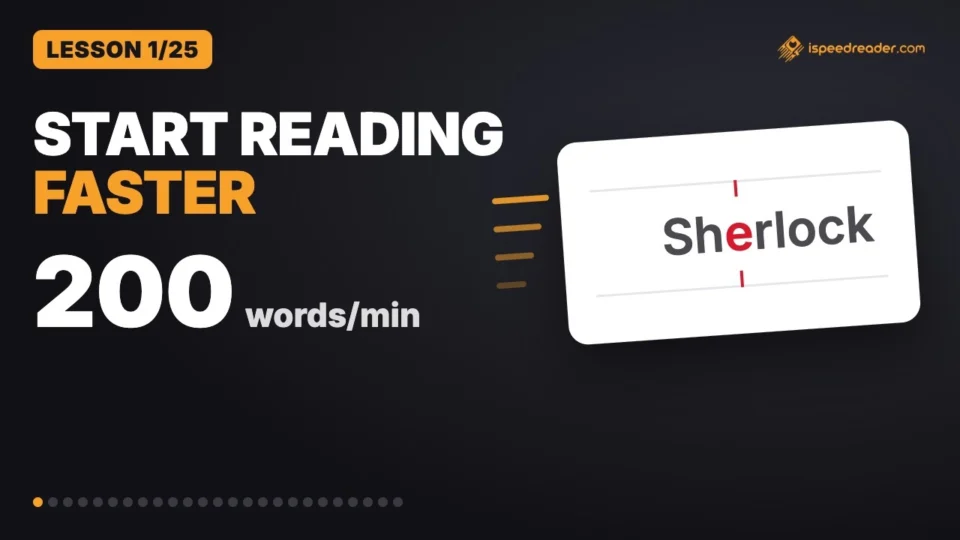 Lesson 1 · 200 wpmYouTube
Warm-up: eyes on the centre of the word, no inner voice.
Lesson 2 · 230 wpm
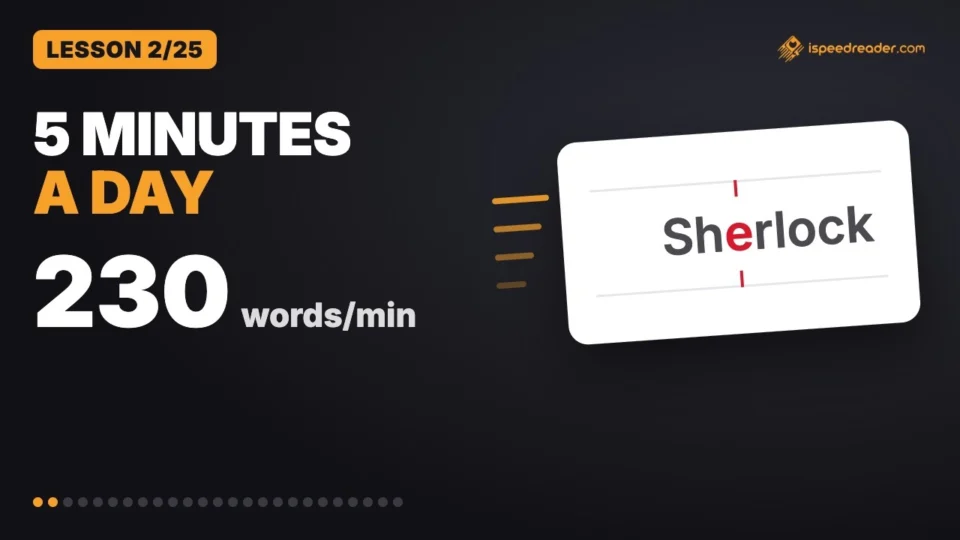 Lesson 2 · 230 wpmYouTube
Warm-up: eyes on the centre of the word, no inner voice.
Lesson 3 · 260 wpm
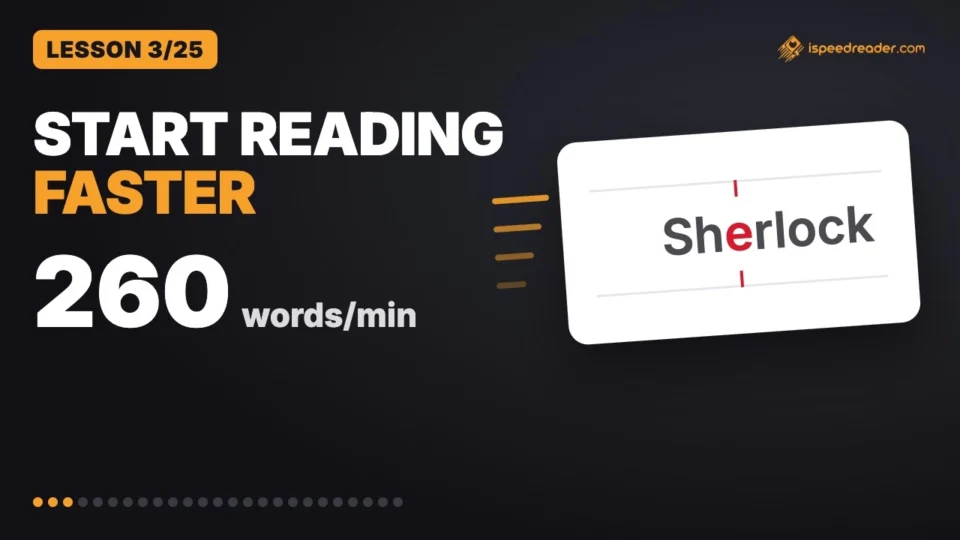 Lesson 3 · 260 wpmYouTube
Warm-up: eyes on the centre of the word, no inner voice.
Lesson 4 · 290 wpm
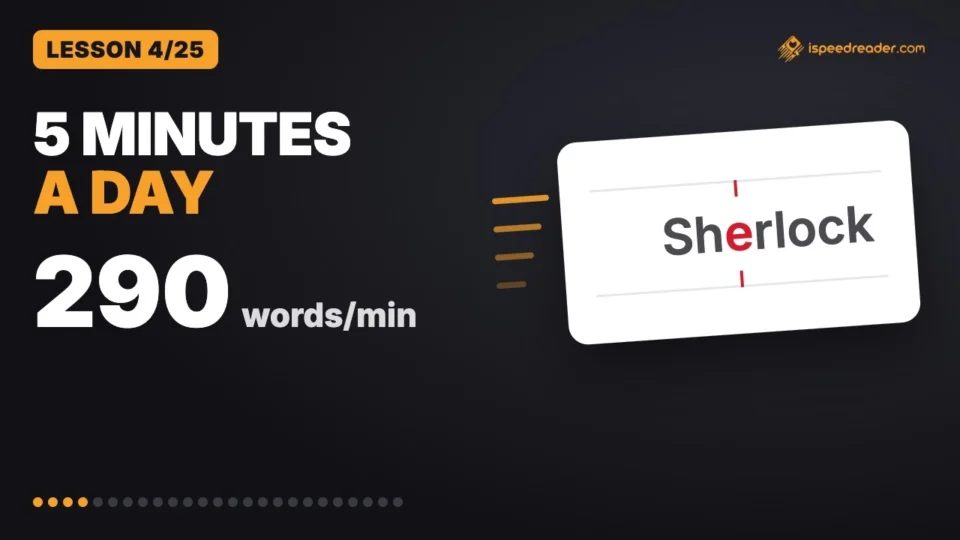 Lesson 4 · 290 wpmYouTube
Warm-up: eyes on the centre of the word, no inner voice.
Lesson 5 · 315 wpm
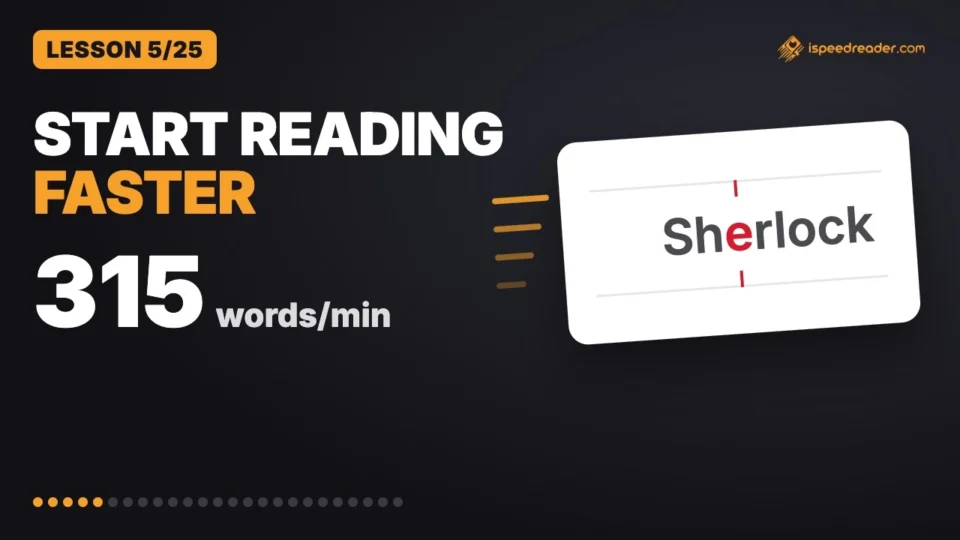 Lesson 5 · 315 wpmYouTube
Faster than usual. Do not look back.
Lesson 6 · 345 wpm
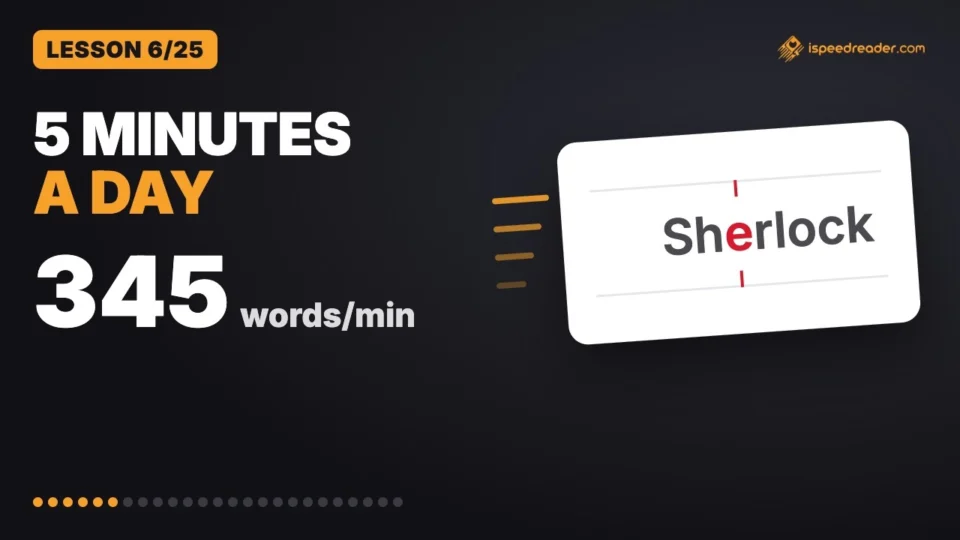 Lesson 6 · 345 wpmYouTube
Faster than usual. Do not look back.
Lesson 7 · 375 wpm
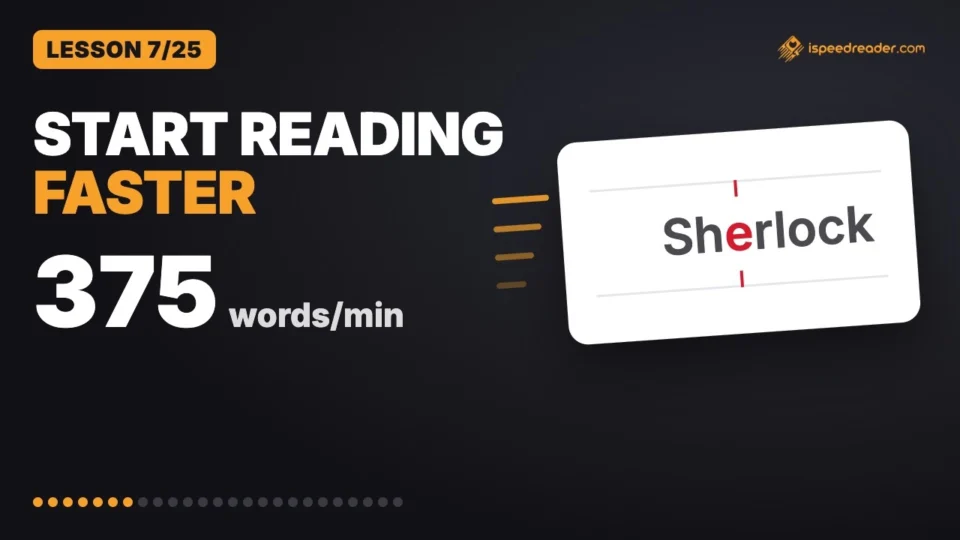 Lesson 7 · 375 wpmYouTube
Faster than usual. Do not look back.
Lesson 8 · 405 wpm
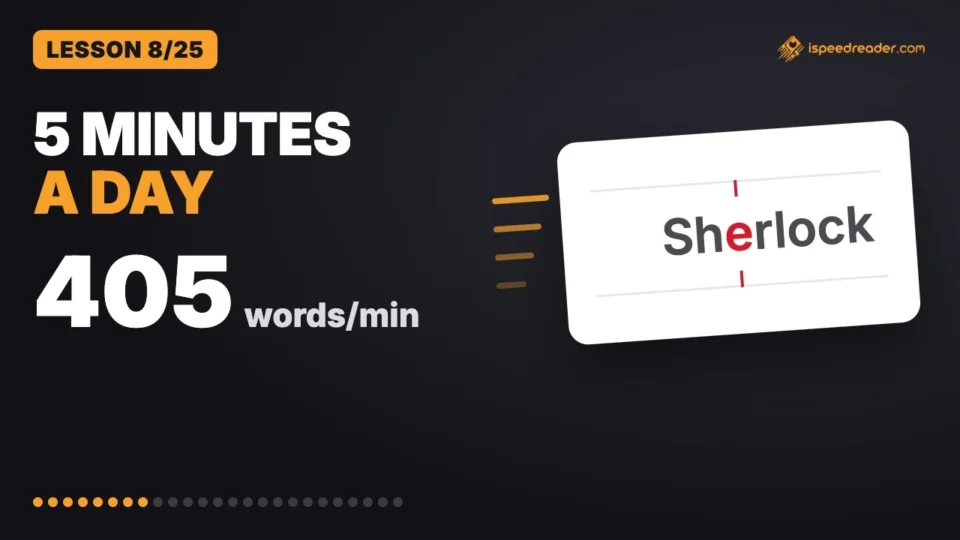 Lesson 8 · 405 wpmYouTube
Faster than usual. Do not look back.
Lesson 9 · 435 wpm
 Lesson 9 · 435 wpmYouTube
Faster than usual. Do not look back.
Lesson 10 · 460 wpm
 Lesson 10 · 460 wpmYouTube
Faster than usual. Do not look back.
Lessons 11–20: 490–755 words per minute
Lesson 11 · 490 wpm
 Lesson 11 · 490 wpmYouTube
Faster than usual. Do not look back.
Lesson 12 · 520 wpm
 Lesson 12 · 520 wpmYouTube
Faster than normal reading. Keep your eyes on the centre and relax them.
Lesson 13 · 550 wpm
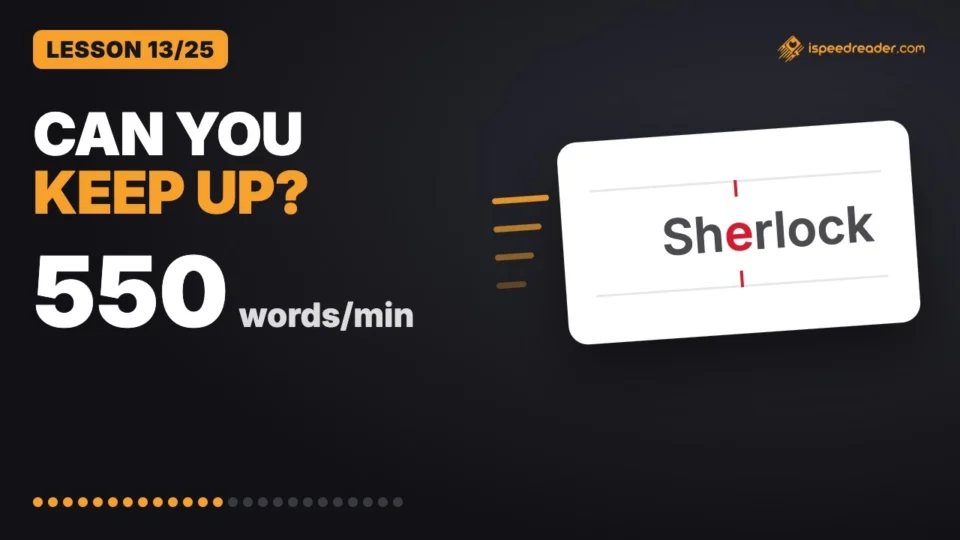 Lesson 13 · 550 wpmYouTube
Faster than normal reading. Keep your eyes on the centre and relax them.
Lesson 14 · 580 wpm
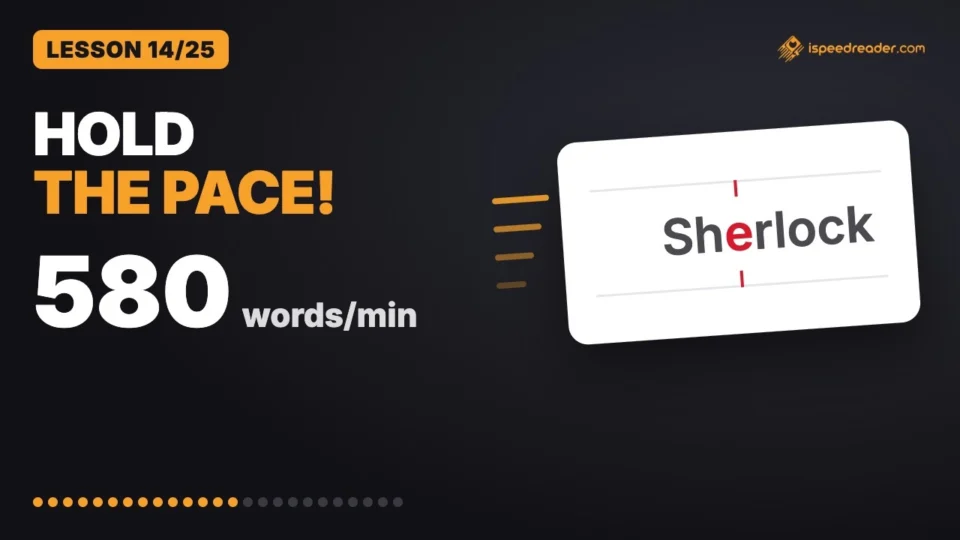 Lesson 14 · 580 wpmYouTube
Faster than normal reading. Keep your eyes on the centre and relax them.
Lesson 15 · 610 wpm
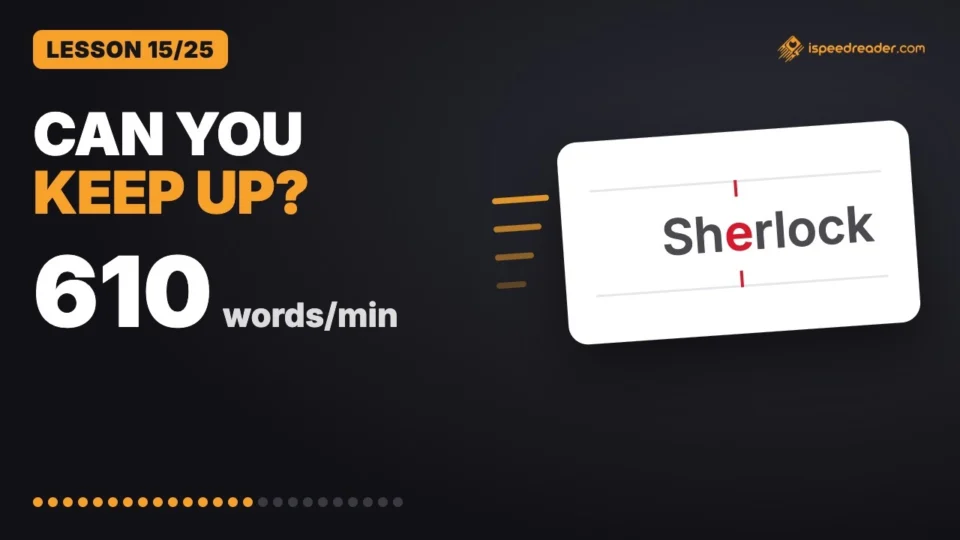 Lesson 15 · 610 wpmYouTube
Faster than normal reading. Keep your eyes on the centre and relax them.
Lesson 16 · 640 wpm
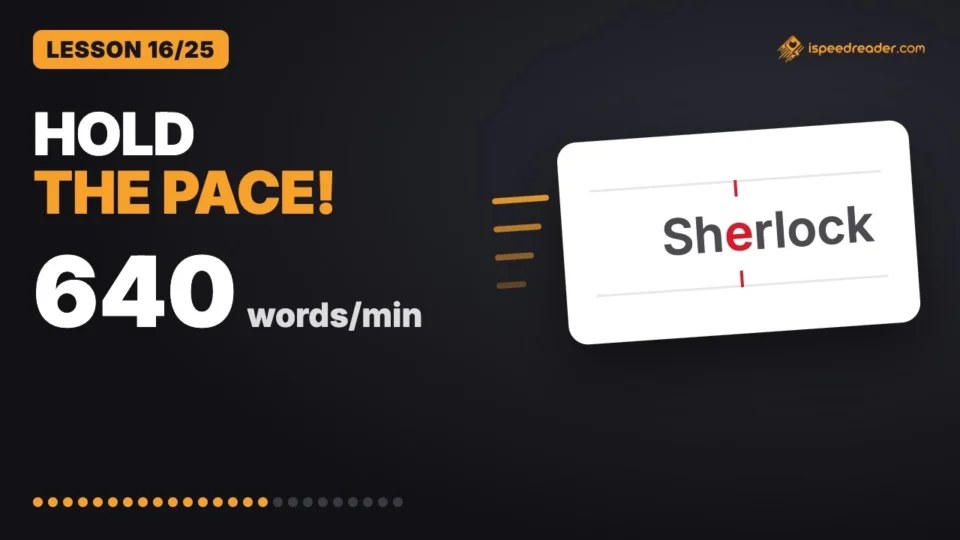 Lesson 16 · 640 wpmYouTube
Faster than normal reading. Keep your eyes on the centre and relax them.
Lesson 17 · 665 wpm
 Lesson 17 · 665 wpmYouTube
Faster than normal reading. Keep your eyes on the centre and relax them.
Lesson 18 · 695 wpm
 Lesson 18 · 695 wpmYouTube
Faster than normal reading. Keep your eyes on the centre and relax them.
Lesson 19 · 725 wpm
 Lesson 19 · 725 wpmYouTube
High pace. Losing the meaning? Go back 2–3 lessons.
Lesson 20 · 755 wpm
 Lesson 20 · 755 wpmYouTube
High pace. Losing the meaning? Go back 2–3 lessons.
Lessons 21–25: 785–900 words per minute
Lesson 21 · 785 wpm
 Lesson 21 · 785 wpmYouTube
High pace. Losing the meaning? Go back 2–3 lessons.
Lesson 22 · 810 wpm
 Lesson 22 · 810 wpmYouTube
High pace. Losing the meaning? Go back 2–3 lessons.
Lesson 23 · 840 wpm
 Lesson 23 · 840 wpmYouTube
High pace. Losing the meaning? Go back 2–3 lessons.
Lesson 24 · 870 wpm
 Lesson 24 · 870 wpmYouTube
High pace. Losing the meaning? Go back 2–3 lessons.
Lesson 25 · 900 wpm
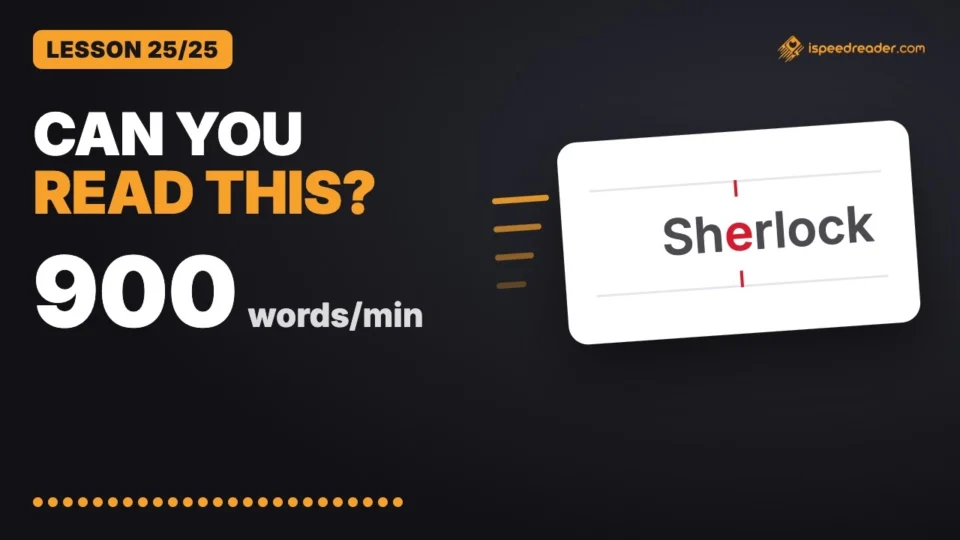 Lesson 25 · 900 wpmYouTube
High pace. Losing the meaning? Go back 2–3 lessons.
Finished all 25 lessons? Take the reading speed test on a normal text and compare it with your result before the trainer. If comprehension stays above 70%, practise your new speed on books, not only on videos.
FAQ
How long should I practise each day?
One lesson a day is enough. Regular practice matters more than long sessions.
What if I cannot keep up?
Go back 2–3 lessons and work your way up again. A pace where you lose the meaning is too early to lock in.
Is the trainer suitable for children?
Yes, for school-age children who already read whole words. Younger children should start with our course for ages 6–8, where pace and texts match their age.
How is the trainer different from the course?
The trainer builds pace. The course adds comprehension, attention, memory and progress tests.